How to Find an ASE-Certified Mechanic Nearby
If you’ve ever paid for a repair that didn’t fix the problem, you already know how much the wrong mechanic can cost you. When you need to find an ASE-certified mechanic nearby, the challenge isn’t just locating a shop. It’s knowing whether that shop actually has the skills, tools, and integrity to handle your car correctly. ASE certification, which stands for Automotive Service Excellence, is the recognized industry standard for technician competency in the United States. This guide is built specifically for Lynnwood, WA car owners who want a clear, no-nonsense path to finding and vetting a qualified shop they can trust for the long haul.
Table of Contents
- Key takeaways
- How to find ASE-certified mechanics nearby
- Practical ways to locate certified shops in Lynnwood
- Vetting a shop before you hand over your keys
- Mistakes to avoid when searching for certified mechanics
- What to expect from a quality certified shop
- My honest take on ASE certification and local trust
- Trusted ASE-certified auto repair near Lynnwood, WA
- FAQ
Key takeaways
| Point | Details |
|---|---|
| ASE is the industry standard | ASE certification signals a mechanic passed rigorous exams, but it’s a baseline, not a guarantee of integrity. |
| Master certification means more | ASE master-certified technicians have passed all eight core exams, covering everything from brakes to electrical systems. |
| Verify before you commit | Always confirm certifications in person, check Google reviews, and ask about warranties before authorizing any work. |
| Digital inspections protect you | Reputable shops document findings and get your approval before starting repairs, reducing costly surprises. |
| Local tools and training matter | For hybrids and newer vehicles, ask whether the shop has OEM-level scan equipment and manufacturer-specific training. |
How to find ASE-certified mechanics nearby
The phrase “ASE-certified” gets used a lot in auto repair advertising, so it helps to understand what it actually means before you start searching. ASE, the National Institute for Automotive Service Excellence, administers standardized tests across dozens of repair categories. A mechanic who passes even one of those tests earns the right to call themselves ASE-certified. That’s a meaningful step, but it’s not the whole picture.
The more significant credential is ASE master certification. ASE master-certified mechanics pass all eight core exams covering engine repair, transmission, brakes, electrical systems, heating and air conditioning, and engine performance. That breadth of knowledge matters when your car has an issue that crosses multiple systems, which is more common than people realize on modern vehicles.
Here’s a quick comparison to help you read shop credentials correctly:
| Credential | What it means | Best for |
|---|---|---|
| ASE-certified | Passed at least one ASE exam in a specific area | Routine repairs in that specialty |
| ASE master-certified | Passed all eight core ASE exams | Complex, multi-system diagnostics |
| OEM-trained | Manufacturer-specific training beyond ASE | Hybrids, EVs, advanced electronics |
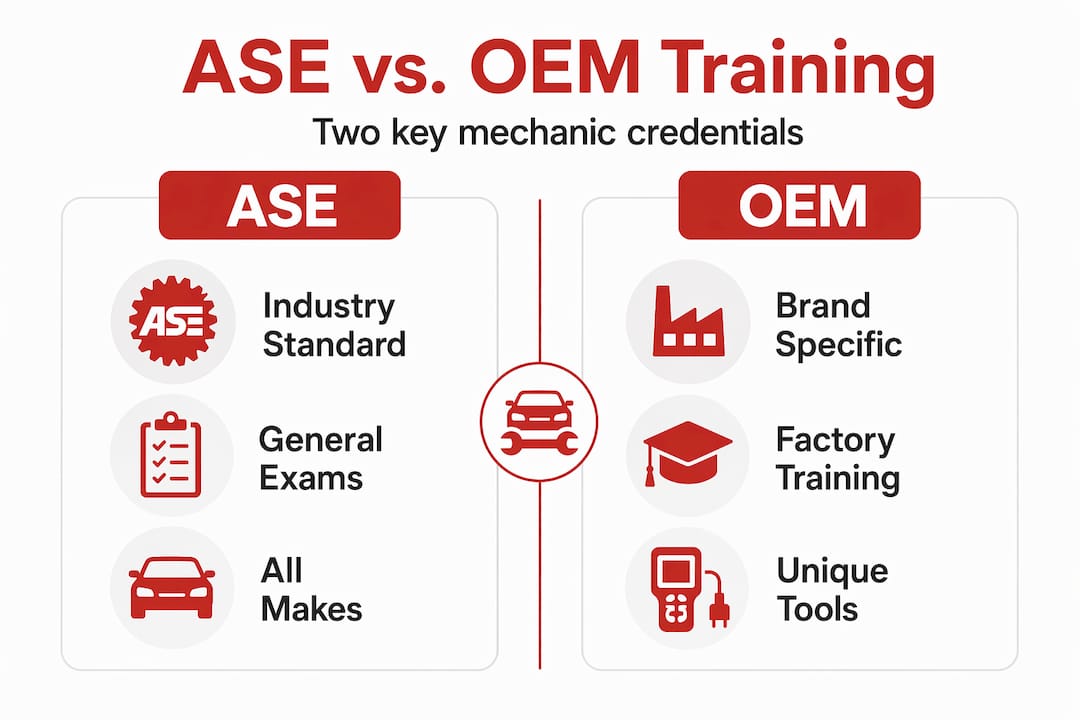
One thing many car owners miss: OEM training is brand-specific and typically not covered by general ASE certifications. A shop that services Toyota hybrids at a high level needs both ASE credentials and access to Toyota-specific scan tools and training. General certification alone won’t cut it for those jobs.
Pro Tip: When you walk into a shop, look for framed ASE certificates on the wall with the technician’s name and the specific test areas they’ve passed. Legitimate shops display these openly. If you can’t find them, ask.
Displaying certifications prominently is a hallmark of shops that take their credentials seriously. It’s a small detail that tells you a lot about how that business operates.
Practical ways to locate certified shops in Lynnwood
Finding local ASE-certified mechanics doesn’t require guesswork. There are reliable tools and methods that narrow the field quickly.
- Use the ASE official locator. ASE maintains a shop locator at ase.com where you can search by zip code and filter for certified shops. It’s the most direct way to confirm a shop has active, verified credentials.
- Check MechanicSeeker. This directory indexes over 44,000 verified shops and tracks both customer review patterns and ASE certification status. It’s one of the more useful third-party tools for comparing certified auto repair shops in your area.
- Read Google reviews carefully. Don’t just look at the star rating. Read the actual text of recent reviews. Look for patterns: do customers mention clear communication, accurate estimates, and repairs that held up? Customer reviews and transparent contact info are among the most reliable vetting signals available.
- Verify the shop’s physical address. A real street address, a working phone number, and a professional website are baseline signs of a legitimate operation. Shops that are hard to locate or vague about their location are worth skipping.
- Ask in local community groups. Lynnwood-area Facebook groups and Nextdoor communities are genuinely useful here. Neighbors who drive the same make of car you do often have firsthand experience with local shops and will tell you exactly who they trust.
Pro Tip: Search for “best ASE mechanics near me” on Google Maps and then cross-reference the top results with the ASE locator. If a shop appears on both, that’s a stronger signal of legitimacy than either source alone.
Vetting a shop before you hand over your keys
Finding a shop on a directory is step one. Confirming they’re the right fit for your specific car is step two. These are the questions and checks that matter most.
Ask about their experience with your make and model. A shop that regularly services Subarus will have a different depth of knowledge than one that sees them occasionally. This is especially true for advanced diagnostics on newer vehicles, where electrical systems and module programming require experience that goes beyond general certification.
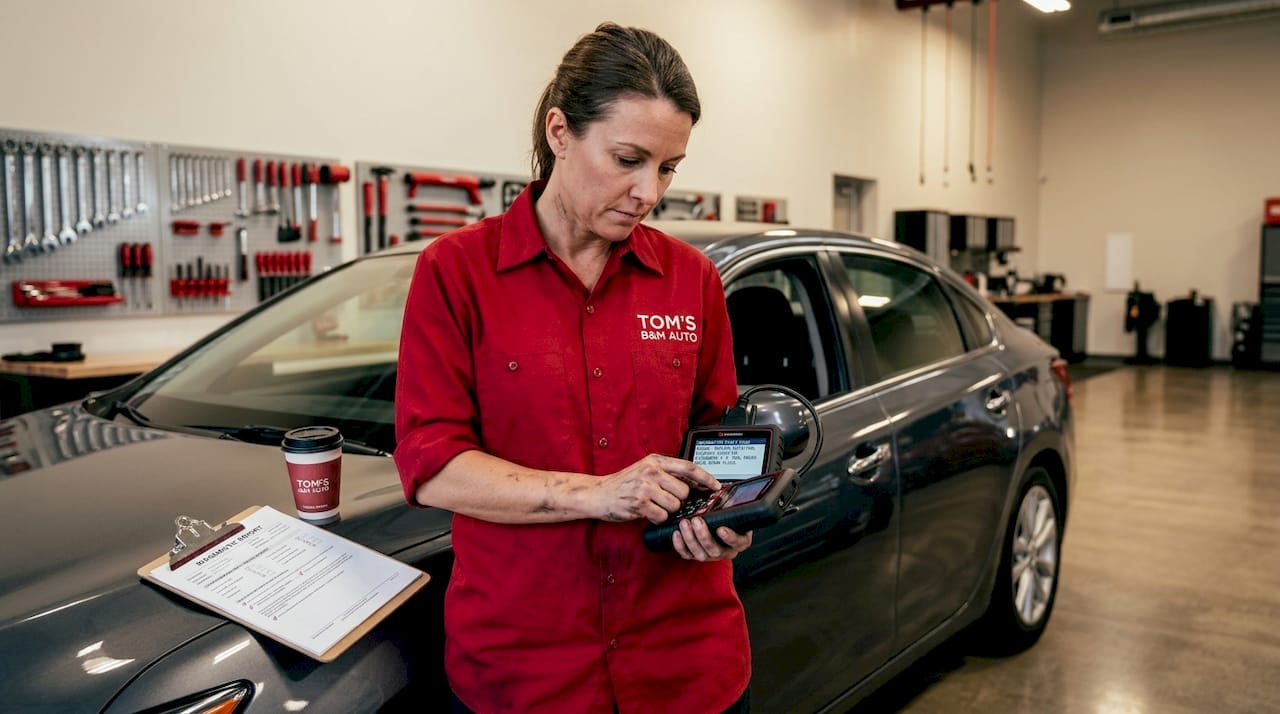
Confirm they use modern diagnostic tools. Quality shops pair digital scan tools with physical inspections before recommending any repairs. If a shop quotes you a repair without running a proper diagnostic first, that’s a red flag.
Ask for a written estimate before work begins. This protects you legally and financially. Shops that hesitate to put estimates in writing are shops to avoid.
Here are the specific red flags to watch for during your first visit:
- Vague answers when you ask about certifications or specialties
- No posted certificates or credentials anywhere in the shop
- Pressure to approve repairs immediately without explanation
- Unwillingness to show you the diagnostic results
- A waiting area or shop floor that looks disorganized or neglected
“ASE certification represents a baseline for mechanics’ competence, but it is not a guarantee of skill or integrity.” — MechanicSeeker
That quote is worth keeping in mind. Certification tells you a mechanic studied and passed a test. It doesn’t tell you how they treat customers or whether they’ll recommend repairs you don’t actually need. Your vetting process has to go beyond the certificate on the wall.
Pro Tip: Ask the shop whether they offer a digital vehicle inspection with photos. Shops that send you a link with images of your car’s actual condition before recommending repairs are operating at a higher standard of transparency.
Mistakes to avoid when searching for certified mechanics
Even careful car owners fall into a few predictable traps when searching for certified auto repair shops. Here’s what to watch out for.
- Trusting paid ads over verified directories. Sponsored search results aren’t vetted for certification status. A shop can pay to appear at the top of Google without a single ASE credential. Always cross-check with the ASE locator or a verified directory.
- Assuming all ASE certifications are equal. A mechanic certified in brakes is not equally qualified to diagnose your hybrid battery system. Understand the scope of the certifications a shop holds before assuming they can handle your specific repair.
- Ignoring shop professionalism. A clean, organized shop with staff who communicate clearly is not a luxury. It reflects how that business manages every part of its operation, including your repair.
- Skipping manufacturer-specific questions for newer vehicles. If you drive a hybrid, an EV, or a vehicle with advanced driver-assist systems, ask directly whether the shop has OEM-level tools and training for your make. General ASE certification may not be enough.
- Not getting anything in writing. Verbal agreements about repairs, costs, and timelines leave you with no recourse if something goes wrong. Skipping documented inspections is one of the most common reasons car owners end up paying for work they didn’t need or didn’t authorize.
What to expect from a quality certified shop
Once you’ve chosen a shop, knowing what a good experience looks like helps you recognize when you’re in the right place and when something feels off.
A quality certified shop will walk you through a digital vehicle inspection before any work starts. You’ll receive documentation of what they found, often with photos, and you’ll approve the work before they touch anything. That process protects both you and the shop.
Here’s what the service experience at a well-run certified shop typically looks like:
| Stage | What should happen |
|---|---|
| Check-in | Technician reviews your concern and vehicle history |
| Inspection | Digital inspection with photos sent to you for review |
| Estimate | Written, itemized estimate with parts and labor costs |
| Approval | You authorize work before anything is started |
| Completion | Technician explains what was done and why |
| Warranty | Written warranty coverage provided for all work |
The warranty piece is worth emphasizing. Reputable shops back their work. A 24-month or 24,000-mile warranty on repairs is a reasonable benchmark. If a shop won’t commit to any warranty, that tells you something important about their confidence in their own work.
Pro Tip: Build a relationship with your mechanic by keeping a simple log of every service visit. When you come in with a history of your car’s repairs, a good technician can spot patterns and catch problems earlier. It also signals that you’re an informed customer, which tends to bring out better service.
My honest take on ASE certification and local trust
I’ve seen the full spectrum of how shops present their credentials, and here’s what I’ve learned: the certificate on the wall is the beginning of the conversation, not the end of it.
In my experience, the shops that genuinely earn long-term customer loyalty in communities like Lynnwood are the ones that combine solid credentials with honest communication. I’ve talked with car owners who chose a shop because it had the most impressive certifications, only to feel dismissed when they asked questions. And I’ve seen shops with fewer credentials that treated every customer like their most important one.
What I’ve found actually works is this: use ASE certification to build your initial list of candidates, then let communication and transparency be your deciding factor. Ask a question you already know the answer to and see how the technician responds. Do they explain it clearly? Do they show you the evidence? Do they seem annoyed that you asked?
The uncomfortable truth is that most car owners never ask those questions. They hand over their keys and hope for the best. The ones who advocate for themselves, who ask for documentation and push back on vague answers, consistently get better outcomes. That’s not a knock on mechanics. It’s just how accountability works in any service relationship.
— Shingi
Trusted ASE-certified auto repair near Lynnwood, WA
If you’ve been searching for reliable auto repair in Lynnwood, Tom’s B & M Auto has been serving this community since 1985. That’s over 40 years of working on Toyotas, Hondas, Subarus, domestic vehicles, and everything in between.
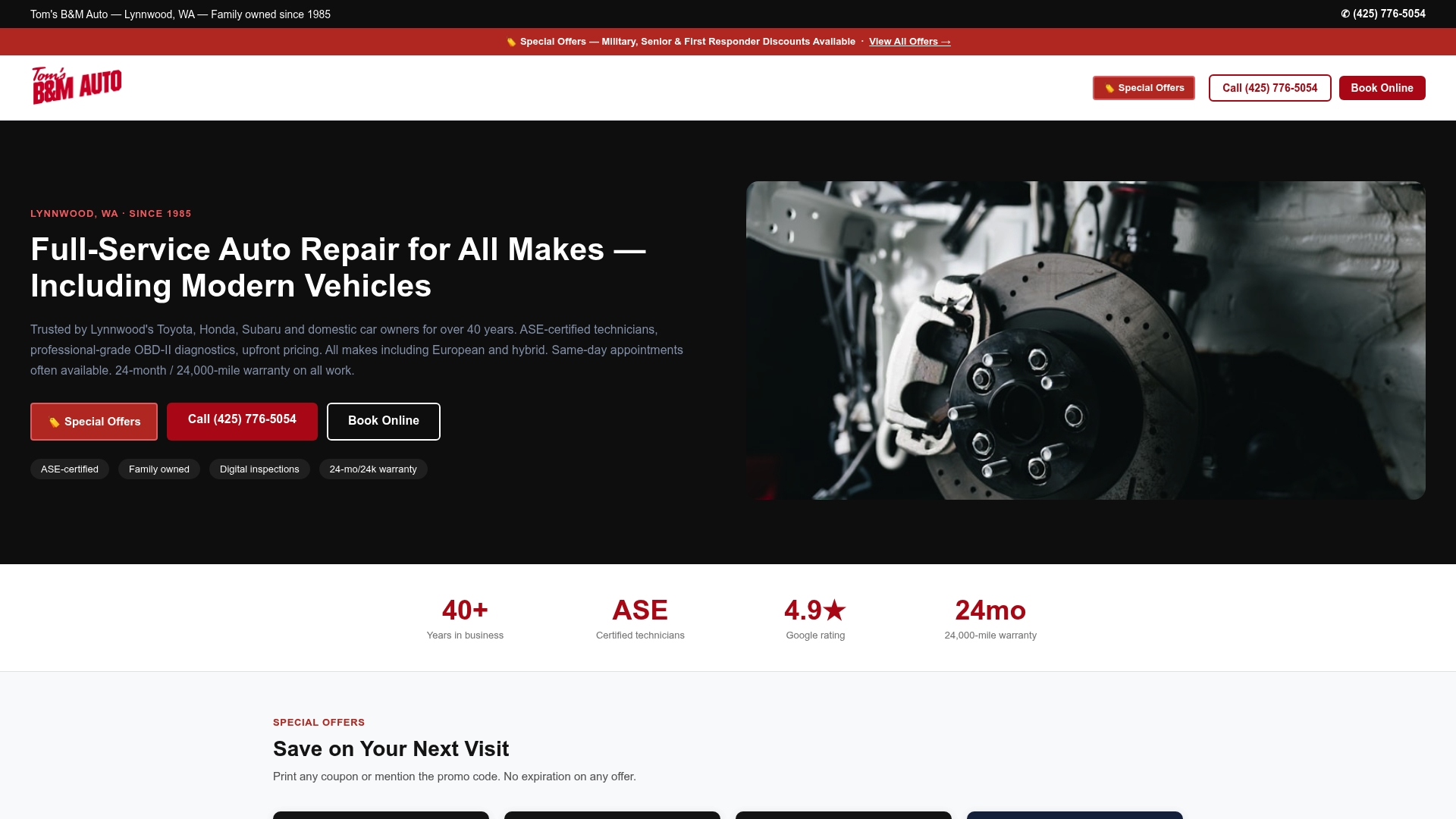
Tom’s B & M Auto’s ASE-certified technicians use professional-grade OBD-II diagnostics and provide upfront pricing on every job. All work comes with a 24-month / 24,000-mile warranty, and same-day appointments are often available. Whether you need a free digital vehicle inspection to understand your car’s condition or a complex repair handled by a master technician, Tom’s B & M Auto is equipped to handle it. If you’re currently dealing with a warning light, you can also take advantage of a free check engine review to get answers without guessing. Schedule your appointment at bandmautocare.com and find out why Lynnwood drivers have trusted this shop for four decades.
FAQ
What does ASE-certified mean for a mechanic?
ASE-certified means a technician has passed at least one standardized exam administered by the National Institute for Automotive Service Excellence, confirming competency in a specific repair area. It is the recognized industry standard for mechanic qualifications in the United States.
What is the difference between ASE-certified and ASE master-certified?
An ASE master-certified technician has passed all eight core ASE exams, covering engine repair, transmission, brakes, electrical systems, and more, while a standard ASE-certified mechanic may have passed only one or a few of those exams.
How do I verify that a shop has active ASE certifications?
You can verify a shop’s credentials using the official ASE shop locator at ase.com or through directories like MechanicSeeker, which tracks certification status and customer reviews for over 44,000 shops.
Do ASE-certified shops work on hybrid and electric vehicles?
Some do, but ASE certification alone does not cover all hybrid or EV systems. Ask specifically whether the shop has OEM-level tools and manufacturer-specific training for your vehicle’s make and model before booking a repair.
What should a good auto repair estimate include?
A written estimate from a reputable shop should itemize parts and labor costs separately, reference the diagnostic findings, and state the warranty coverage for the work being performed. Never approve repairs based on a verbal quote alone.
Recommended
- Free Check Engine Light Review | Tom’s B&M Auto — Lynnwood WA
- Engine Repair in Mountlake Terrace, WA | Tom’s B&M Auto
- Engine Repair in Lynnwood, WA | Tom’s B&M Auto
- Engine Repair in Kenmore, WA | Tom’s B&M Auto
Article generated by BabyLoveGrowth
Leave a Reply