Shop Safety Checklist for Mechanics: 2026 Guide
A shop safety checklist for mechanics is a structured inspection system that covers daily, weekly, monthly, and annual checks to protect workers and meet OSHA requirements. Auto repair shops face real hazards every shift: falling vehicles, chemical exposure, electrical faults, and fire risks. Tiered safety inspections ranging from quick daily sweeps to full monthly audits give shop owners and managers a repeatable system that catches problems before they become injuries. Tom’s B & M Auto, serving Lynnwood, WA since 1985, treats this kind of structured safety discipline as the foundation of every productive workday.
1. What does a daily shop safety checklist for mechanics cover?
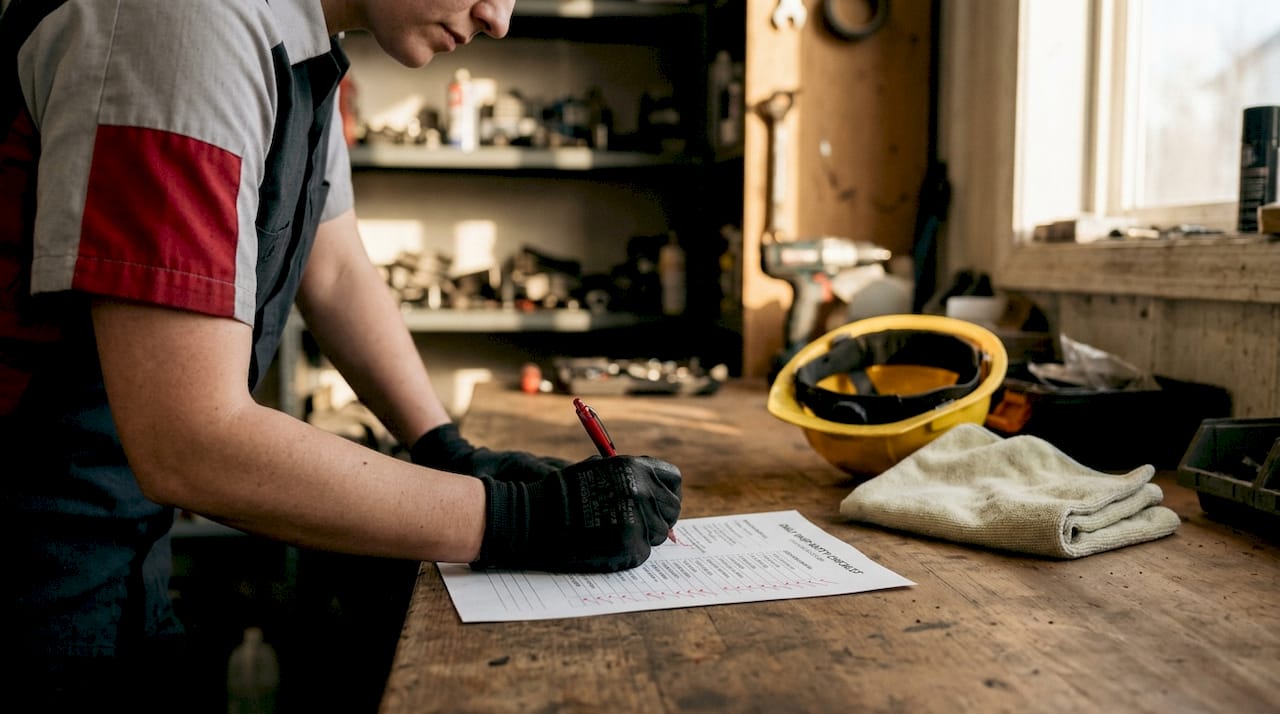
The daily safety sweep is the first line of defense in any mechanic shop safety guide. Industry guidance recommends a 5-minute daily sweep before the first vehicle goes on a lift. That short window catches the hazards most likely to cause an injury before the shift gets busy.
A solid daily automotive safety checklist covers these areas:
- PPE stations: Confirm gloves, safety glasses, and hearing protection are stocked and undamaged.
- Floor condition: Check for oil spills, coolant puddles, and loose debris that cause slips and trips.
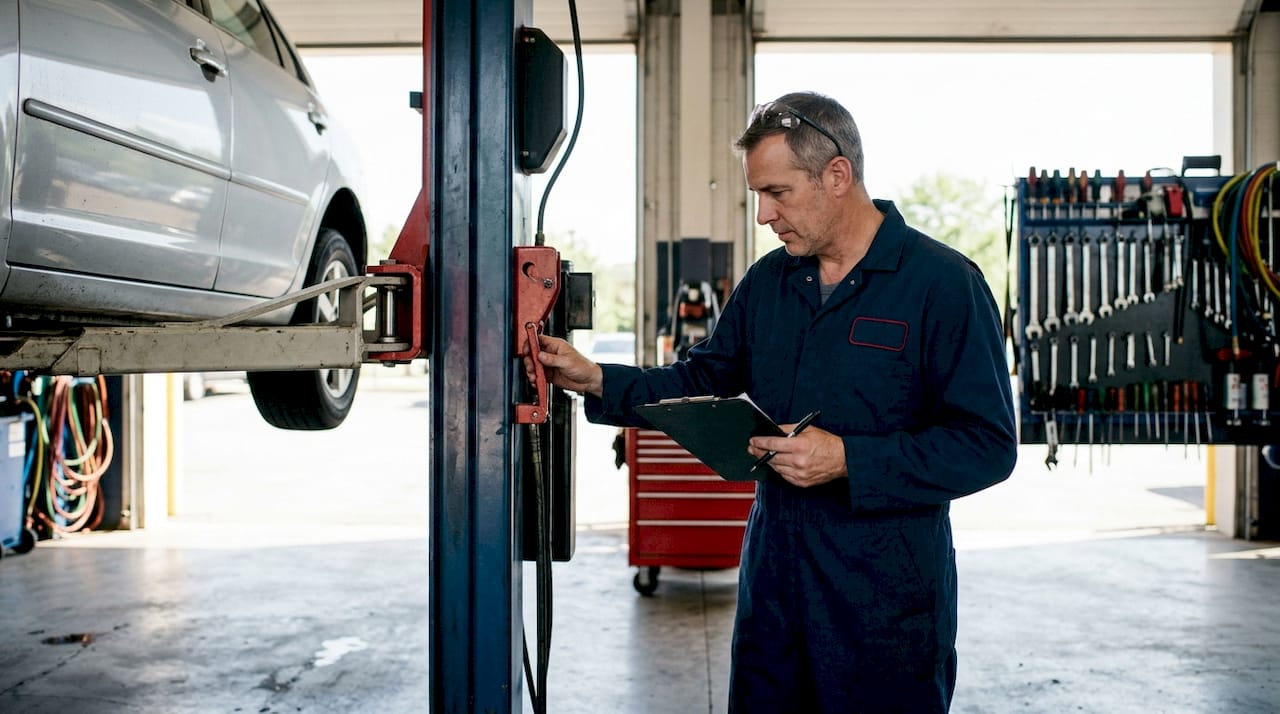
- Lift safety pins and locks: Verify mechanical locks engage before any undercarriage work begins.
- SDS binders: Confirm Safety Data Sheets are accessible and chemical containers are properly labeled.
- Fire extinguisher placement: Check that extinguishers are visible, unobstructed, and show a current inspection tag.
- Aisle clearance: Confirm all walkways and emergency exits are free of parts, tools, and equipment.
- Eyewash station access: Verify the station is unblocked and the weekly flush has been completed.
Each item takes seconds to check. The combined sweep takes under five minutes and creates a documented record that protects you during an OSHA inspection.
Pro Tip: Assign the daily sweep to the first mechanic in each morning. Pair it with a physical sign-off sheet on the shop wall. Managers who walk the floor alongside their team during this check reinforce that safety is a shared responsibility, not a paperwork exercise.
2. How should weekly and monthly shop safety inspections be structured?
Weekly and monthly inspections go deeper than the daily sweep. Comprehensive audits take 30–45 minutes and cover areas that do not change daily but can degrade over time. Skipping these audits is where shops accumulate the violations that lead to OSHA fines of up to $15,625 per violation.
A well-structured monthly workshop safety inspection covers these numbered areas:
- Tool condition: Inspect hand tools and power tools for cracked handles, frayed cords, and missing guards.
- PPE inventory: Count and replace worn or expired gloves, respirator filters, and eye protection.
- Fire extinguisher testing: Confirm pressure gauges are in the green zone and tags show the current inspection date.
- Ventilation system check: LEV systems must be inspected no less frequently than every 14 months. Monthly visual checks confirm airflow is unobstructed.
- Vehicle lift certification: Verify annual certification is current and check anchor bolts and mechanical safety locks for wear.
- Emergency plan review: Confirm evacuation routes are posted, legible, and match current shop layout.
- OSHA posting compliance: Check that required OSHA notices are displayed in a visible location accessible to all mechanics.
- Near-miss log review: Analyze the past month’s near-miss reports for patterns that signal a recurring hazard.
- Chemical storage audit: Confirm flammable liquids are stored in approved cabinets and quantities do not exceed posted limits.
- Injury record check: Confirm incident records are maintained on-site. Injury records must be kept for five years under applicable standards.
Pro Tip: Assign monthly inspection responsibility to a rotating safety lead rather than always defaulting to the shop manager. Rotation builds safety awareness across your entire team and prevents the checklist from becoming one person’s overlooked task.
3. Which equipment and hazard areas need the most attention?
Certain areas of an auto repair shop carry disproportionate risk. Knowing where incidents cluster lets you focus your automotive safety checklist where it matters most.
Vehicle lifts
Vehicle falls cause 12% of automotive workplace incidents, making lift safety the single highest-priority item on any mechanic’s checklist. That statistic means roughly one in eight shop injuries involves a vehicle coming down on a worker. Daily pre-use inspections and annual lift certification are both mandatory, not optional.
Ladders and step stools
Household step stools rated at 200 lbs are not adequate for mechanics carrying tools. Industrial ladders must carry a load rating that accounts for the mechanic’s body weight plus the weight of tools and parts. Using the wrong equipment is a common and preventable cause of falls.
Electrical hazards
Grounded tools or double-insulated types are required near flammable substances. Damaged cords near fuel, oil, or solvents create fire and shock risks simultaneously. Check every cord during the monthly audit and pull any damaged tool from service immediately.
| Hazard area | Recommended control |
|---|---|
| Vehicle lifts | Daily pre-use check, annual certification, mechanical lock verification |
| Ladders and step stools | Industrial-rated equipment only, load rating posted |
| Electrical cords and tools | Grounded or double-insulated, no damaged cords near flammables |
| Flammable liquid storage | Approved cabinets, posted quantity limits, no open containers |
| Eyewash stations | Weekly flush for plumbed units, preservative replaced before expiration |
| Machine guards | Present, secured, and undamaged before each use |
4. What are best practices for PPE protocols in auto repair shops?
PPE compliance starts before a single glove is handed out. OSHA requires a written hazard assessment that identifies the specific PPE needed for each task in your shop. That document drives every PPE decision you make. Employers must provide PPE free of charge and deliver documented training on proper use and care.
Common PPE in an auto repair environment includes:
- Gloves: Choose task-specific types. Vibration-dampening gloves protect mechanics using impact tools for extended periods.
- Safety glasses: Must meet ANSI Z87.1 standards. Standard eyewear does not qualify.
- Hearing protection: Required when noise levels exceed OSHA thresholds. Earplugs and earmuffs both qualify when rated correctly.
- Respirators: Filter replacement schedules must be followed. A clogged filter provides no protection.
- Face shields: Required for grinding, cutting, and chemical handling tasks.
Storage and inspection matter as much as provision. PPE left in a dirty drawer or exposed to UV light degrades faster than expected. Assign a dedicated PPE station in a clean, dry location and inspect it during every monthly audit.
Safety experts confirm that PPE compliance requires active management leadership, not just equipment availability. Managers who wear their own PPE on the shop floor set the standard more effectively than any posted sign.
Pro Tip: Post a laminated PPE requirement card at each workstation showing exactly which protection is required for that task. Mechanics should not have to guess. Clarity removes the most common excuse for skipping protection.
5. How does leadership visibility shape shop safety culture?
Leadership presence on the shop floor is the most underrated element of any mechanic shop safety guide. Regular safety inspections by management transform safety from a compliance exercise into a daily habit. When mechanics see their manager checking lifts and PPE stations, they internalize that these checks are real priorities.
Daily walkthroughs give managers early visibility into irregularities that a checklist alone cannot capture. A mechanic who mentions a near-miss during a walkthrough provides information that prevents the next incident. That conversation only happens when the shop culture treats near-miss reporting as valuable, not as an admission of fault.
“The most overlooked element of any safety program is near-miss documentation. Physical safety walks are essential for practical readiness beyond digital checklists alone.”
— Shop Safety Inspections, CHESS Safety, January 2026
Near-miss documentation reveals hazard trends early. A single near-miss is an anecdote. Three near-misses in the same area over two months is a pattern that demands a fix. Shops that log and review near-misses consistently catch systemic problems before they produce recordable injuries.
The hierarchy of controls reinforces this point. Eliminating a hazard entirely is always better than relying on PPE to manage it. Engineering controls like machine guards, ventilation upgrades, and lift certifications reduce risk at the source. Leadership that invests in those controls sends a clear message about the shop’s values.
Key Takeaways
A tiered shop safety checklist covering daily sweeps, monthly audits, and annual reviews is the most effective system for preventing injuries and maintaining OSHA compliance in an auto repair shop.
| Point | Details |
|---|---|
| Daily sweeps prevent most injuries | A 5-minute daily check of lifts, PPE, floors, and fire equipment catches hazards before they cause harm. |
| Monthly audits close the gaps | 30–45 minute inspections cover tool condition, ventilation, lift certification, and near-miss trends. |
| Lift safety is the top priority | Vehicle falls cause 12% of automotive incidents, requiring daily pre-use checks and annual certification. |
| PPE requires documentation | OSHA mandates written hazard assessments, free PPE provision, and documented training for every mechanic. |
| Leadership drives compliance | Managers who walk the floor daily and log near-misses build a safety culture that checklists alone cannot create. |
What I’ve learned about shop safety checklists after years in automotive repair
The shops that struggle most with safety are not the ones that lack checklists. They are the ones that treat the checklist as a form to file rather than a tool to use. I have seen beautifully formatted automotive safety checklists sitting in a binder that nobody opened for six months. The paper was perfect. The shop floor was not.
Near-miss reporting is where most shops fall short. Mechanics hesitate to report close calls because they worry it reflects poorly on them. That silence is exactly how a near-miss becomes a recordable injury the following month. Building a culture where near-misses are reported and rewarded takes deliberate effort from ownership, not just a policy memo.
The technology question comes up often. Digital checklists and inspection apps have real value for documentation and trend tracking. But physical safety walks cannot be replaced by any app. You cannot smell a coolant leak or feel a loose lift anchor bolt through a screen. The walk is the work.
At Tom’s B & M Auto, the commitment to ASE-certified standards and documented inspection procedures reflects the same discipline that a strong safety checklist demands. The shops that take both seriously tend to have fewer surprises, lower turnover, and better reputations with their customers.
— Shingi
Tom’s B & M Auto: quality repairs backed by real safety standards
Tom’s B & M Auto has served Lynnwood, WA since 1985 with ASE-certified technicians, upfront pricing, and a 24-month / 24,000-mile warranty on all work. That track record comes from the same disciplined approach to inspection and documentation that a strong shop safety program demands.
Shop owners investing in safety equipment upgrades, lift certifications, or ventilation improvements can explore financing options that make those upgrades accessible without disrupting cash flow. Tom’s B & M Auto also offers a free digital vehicle inspection that demonstrates what thorough, documented inspection looks like in practice. Whether you need a service model to reference or a trusted repair partner for your customers, Tom’s B & M Auto is ready to help.
FAQ
What is a shop safety checklist for mechanics?
A shop safety checklist for mechanics is a structured inspection tool covering daily, weekly, monthly, and annual checks of equipment, PPE, fire safety, and hazard documentation to protect workers and meet OSHA standards.
How often should a mechanic shop conduct safety inspections?
Shops should run a 5-minute daily sweep every morning, a 30–45 minute monthly audit, and an annual third-party review to maintain full compliance and catch hazards at every level.
What does OSHA require for PPE in auto repair shops?
OSHA requires employers to complete a written hazard assessment, provide task-specific PPE free of charge, and deliver documented training on proper use and care for every mechanic.
Why are vehicle lifts the highest-priority item on a safety checklist?
Vehicle falls account for 12% of automotive workplace incidents, making daily pre-use lift inspections and annual lift certification the most critical preventive measures in any auto repair shop.
How often must Local Exhaust Ventilation systems be inspected?
LEV systems must be inspected at least every 14 months to meet compliance requirements and confirm they are removing fumes and airborne contaminants effectively from the shop environment.
Recommended
- Mechanic Flat Rate Efficiency Tips to Maximize Pay – Tom’s B & M Auto Blog
- How to Inspect Brake Pads at Home: A Safe Guide – Tom’s B & M Auto Blog
- ASE Certification Benefits for Mechanics: Career Guide – Tom’s B & M Auto Blog
- How to Avoid Unnecessary Upsells at Your Auto Shop – Tom’s B & M Auto Blog
Leave a Reply