

Hybrid Battery Service Explained: 2026 Owner’s Guide
Hybrid battery service is defined as the professional process of inspecting, maintaining, diagnosing, repairing, or replacing the high-voltage battery pack in a hybrid vehicle to preserve performance and extend its working life. Toyota Prius, Honda Accord Hybrid, and Lexus ES 300h owners all depend on this service to protect one of the most expensive components in their vehicles. The industry term you’ll hear from ASE-certified technicians is “high-voltage battery system service,” though hybrid battery service is the phrase most owners search for and most shops use in practice. Skipping this service doesn’t just risk a dead battery. It risks a repair bill that can reach $8,000.
What does hybrid battery service include?
Hybrid battery service covers far more than swapping out cells. A complete service visit addresses the entire battery system, including components that most owners never think about until something fails.
Routine maintenance tasks form the foundation of every service visit:
- Cooling fan inspection and cleaning to remove dust and debris blocking airflow
- Intake filter replacement, which should happen annually in hot climates to prevent heat-related degradation
- Terminal and bus bar connection checks for corrosion or looseness
- 12V auxiliary battery inspection, since a weak 12V battery stresses the main pack
- Inverter coolant level check and condition assessment
Professional diagnostics go well beyond pulling OBD-II trouble codes. Technicians perform module-level voltage and resistance measurements across every cell group in the pack. This reveals which specific modules are weak before the battery triggers a warning light. A controlled high-amperage discharge test simulates real driving loads, giving technicians granular data on each module’s actual capacity. Skipping any step in this sequence leads to misdiagnosis and unnecessary full replacements.
Software and firmware updates are a frequently overlooked part of the service. Battery Management System updates optimize charge cycles and regenerative braking efficiency. Most manufacturers release these updates periodically, and they’re typically applied at no extra charge during a service visit.
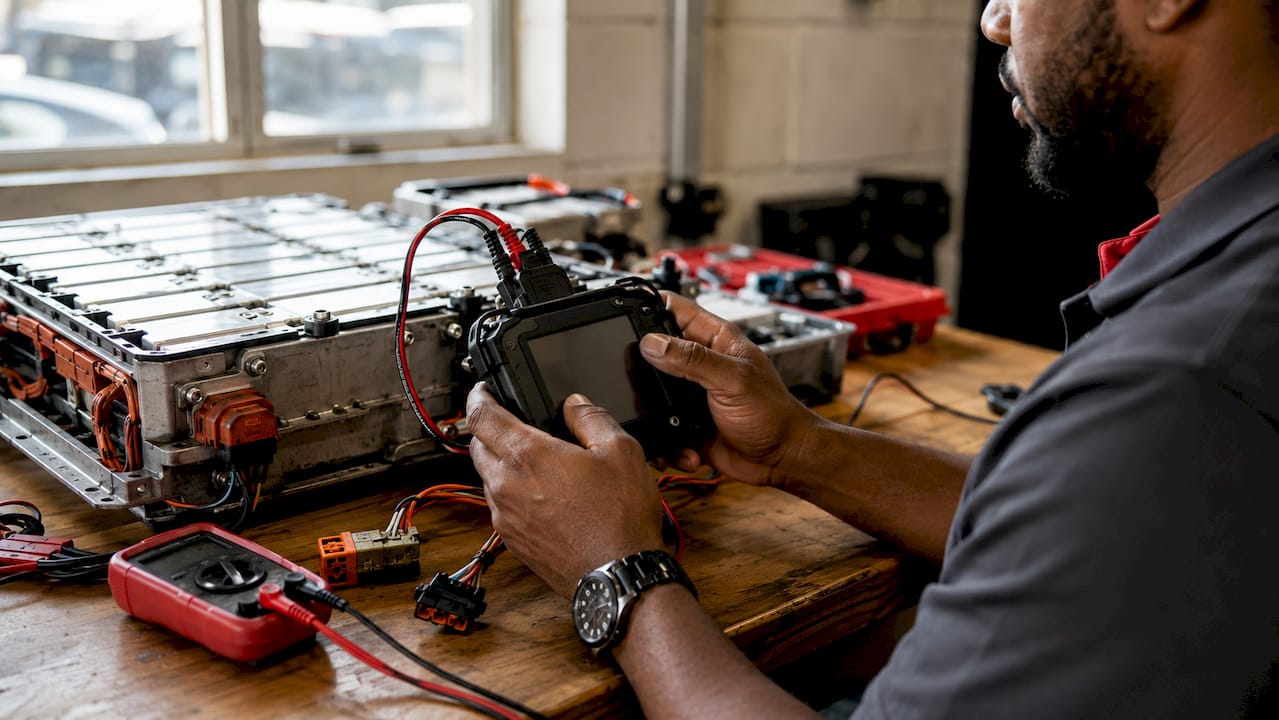
Pro Tip: Ask your technician specifically whether the Battery Management System firmware was updated during your visit. Many shops perform the hardware checks but skip this step, leaving efficiency gains on the table.
Hybrid battery repair vs. reconditioning vs. replacement
These three terms describe different levels of intervention, and choosing the wrong one costs you money. Here’s how they differ in practice.
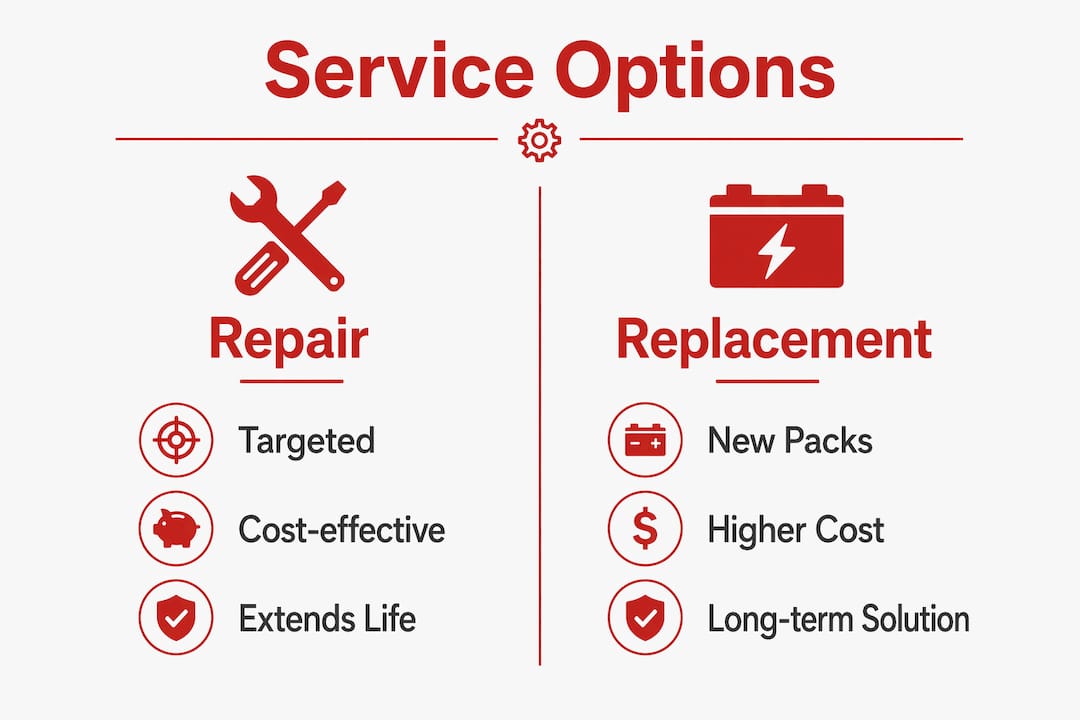
Repair targets the specific weak modules inside the pack. Hybrid batteries degrade gradually through internal cell imbalance, not sudden failure. A skilled technician identifies those weak cells using high-powered discharge tests and replaces only the failing modules. This approach costs less upfront and extends battery life by 2–5 years.
Reconditioning restores the balance across all modules without replacing cells. Technicians cycle the battery through controlled charge and discharge sequences to equalize cell voltages. This works best on batteries showing early-stage imbalance before any cells have fully degraded.
Replacement installs either a quality remanufactured pack or a new OEM unit. This is the right call when too many modules have failed or when the pack is too far gone for repair to be cost-effective.
The table below shows the 2026 cost and lifespan data for each option:
| Service Type | Typical Cost (2026) | Lifespan Extension | Best Use Case |
|---|---|---|---|
| Module-level repair | $1,200–$2,500 | 2–5 years | 1–3 weak modules identified |
| Reconditioning | $500–$1,500 | 1–3 years | Early-stage cell imbalance |
| Remanufactured pack | $1,800–$3,500 | 5–8 years | Multiple failed modules |
| New OEM replacement | $3,000–$8,000 | 8–10+ years | Severe pack failure or high-mileage vehicle |
Pro Tip: A remanufactured pack from a reputable supplier often delivers near-OEM performance at roughly half the cost of a new pack. Ask your shop whether the remanufactured option carries a warranty of at least 12 months before agreeing to it.
How to maximize hybrid battery lifespan
Hybrid batteries generally last 8–10 years or 100,000–150,000 miles. That range is not fixed. What you do between service visits determines where your battery lands on that spectrum.
Follow this maintenance routine to get the most out of your pack:
- Schedule a professional diagnostic scan every 6–12 months. A diagnostic visit typically costs $100–$150 and catches cell imbalances before they cascade into full pack failure. This is the single highest-return maintenance habit for hybrid owners.
- Clean or replace the battery cooling fan filter annually. Heat is the primary accelerant of battery degradation. Cooling system cleaning costs $50–$100 per service and directly reduces heat-related wear.
- Keep your PHEV charge level between 20% and 80%. Frequent fast Level 3 charging reduces battery life by roughly 10% over eight years compared to slower Level 2 charging. Use Level 2 for daily charging whenever possible.
- Avoid extended parking in extreme heat. Parking in direct sun on hot days accelerates cell degradation even when the vehicle is off. Covered or shaded parking makes a measurable difference over years of ownership.
- Request BMS firmware updates at every service visit. These updates refine how the battery manages charge cycles and regenerative braking, improving both efficiency and longevity.
You can also tie battery maintenance into your broader seasonal service schedule. A seasonal maintenance checklist helps you track cooling system checks, diagnostic scans, and other time-sensitive tasks in one place.
Pro Tip: Battery cooling intake vents on most Toyota Prius and Honda Accord Hybrid models are located under the rear seat or in the trunk area. Vacuuming that area monthly costs nothing and meaningfully reduces heat buildup.
What are the signs your hybrid battery needs service?
Catching battery problems early is the difference between a $1,500 repair and a $6,000 replacement. These are the symptoms that tell you it’s time to book a service appointment:
- Declining fuel economy. A drop of 10–15% in your typical MPG is one of the earliest signs the battery is no longer holding or delivering charge efficiently.
- Hybrid system warning lights. A red or amber hybrid battery warning on your dashboard requires immediate professional attention, not a reset.
- Weak or inconsistent electric assist. If the electric motor feels sluggish during acceleration or the engine kicks in earlier than usual at low speeds, the battery is struggling to supply power.
- State of charge fluctuations. A battery gauge that swings rapidly or refuses to hold a consistent charge level points to cell imbalance.
- Increased engine run time. The gas engine running more than normal at low speeds means the battery can’t carry its share of the load.
“Reading only error codes leads to unnecessary replacements. Module-level data is critical for precise repairs.” — Aloy Hybrid
Professional diagnostics follow a layered sequence. Technicians start with OBD-II codes to identify flagged systems, then move to active load tests and voltage imbalance checks at the module level. This multi-step process is what separates an accurate diagnosis from a guess. A shop that quotes you a full replacement based on a code scan alone has skipped the most important steps.
If your check engine light is already on, getting a proper scan at a shop with professional-grade equipment matters. Tom’s B & M Auto handles check engine diagnostics in Lynnwood with the same layered approach used for hybrid battery assessment.
Key takeaways
Proactive hybrid battery service, combining annual cooling system maintenance, periodic module-level diagnostics, and timely repair, prevents the majority of costly full pack replacements.
| Point | Details |
|---|---|
| Service scope is broad | Hybrid battery service covers cooling fans, BMS updates, diagnostics, and cell repair, not just the battery cells. |
| Three service tiers exist | Repair, reconditioning, and replacement each suit different failure stages and carry different costs. |
| Early diagnosis saves money | Module-level diagnostics costing $100–$150 can prevent replacements costing $3,000–$8,000. |
| Cooling system is critical | Annual fan and filter cleaning is the most cost-effective way to slow battery degradation. |
| PHEV charging habits matter | Keeping charge between 20%–80% and avoiding Level 3 fast charging extends battery life by years. |
What i’ve learned after years of watching hybrid batteries fail
The most common mistake I see hybrid owners make is waiting for a warning light before booking a service. By the time a warning light appears, the battery has usually been degrading for months. The light is not the start of the problem. It’s the end of a long process that a diagnostic scan six months earlier would have caught.
The second mistake is accepting a full replacement quote without asking for module-level data. I’ve seen batteries quoted for full replacement that needed only two or three modules swapped out. The difference in cost was over $4,000. A shop that won’t show you the per-module voltage and load test results before recommending replacement is not giving you the full picture.
Thermal management is the factor most owners underestimate. The battery cooling system in a Toyota Prius or Honda Accord Hybrid is simple, but it works hard. A clogged intake filter forces the battery to operate at higher temperatures for months at a time. That heat compounds. It doesn’t reset when the weather cools down. The cumulative effect shows up years later as premature cell failure.
My honest recommendation: treat hybrid battery maintenance the same way you treat oil changes. Put it on a schedule, not a symptom list. A $150 diagnostic scan every year is cheap insurance against a repair that can cost more than the car is worth.
— Shingi
Hybrid battery service at tom’s b & m auto in lynnwood
Tom’s B & M Auto has been serving Lynnwood, WA drivers since 1985, and hybrid battery service is a core part of what the shop handles today. ASE-certified technicians perform module-level diagnostics, cooling system service, BMS updates, and full pack replacements across Toyota, Honda, Subaru, Lexus, and Hyundai hybrid models.
Hybrid battery repairs and replacements are a significant expense for most owners. Tom’s B & M Auto offers financing options to make those costs manageable without delaying necessary work. The shop also backs all hybrid battery work with a 24-month / 24,000-mile warranty. If you’re in the Lynnwood area and want a battery replacement estimate, same-day appointments are often available. Call (425) 776-5054 or book online.
FAQ
What is hybrid battery service exactly?
Hybrid battery service is the professional inspection, maintenance, diagnosis, repair, or replacement of a hybrid vehicle’s high-voltage battery pack. It includes cooling system cleaning, module-level diagnostics, BMS software updates, and cell or pack replacement when needed.
How much does hybrid battery service cost in 2026?
Costs range from $100–$150 for a diagnostic scan to $1,200–$2,500 for module-level repair, $1,800–$3,500 for a remanufactured pack, and $3,000–$8,000 for a new OEM replacement, depending on the vehicle and severity of the issue.
How often should i get hybrid battery maintenance?
A professional diagnostic scan every 6–12 months and annual cooling fan and filter cleaning are the two most important recurring maintenance tasks for hybrid battery health.
Can a hybrid battery be repaired instead of replaced?
Yes. When only a few modules have failed, targeted cell replacement extends battery life by 2–5 years at a fraction of full replacement cost. Module-level diagnostics are required to confirm whether repair is viable.
What are the first signs of hybrid battery failure?
The earliest signs include a noticeable drop in fuel economy, inconsistent electric assist during acceleration, and a battery charge gauge that fluctuates more than usual. Warning lights typically appear after the problem has already progressed.
Recommended
- Battery Replacement in Shoreline, WA | Tom’s B&M Auto
- Battery Replacement in Lynnwood, WA | Tom’s B&M Auto
- Battery Replacement in Edmonds, WA | Tom’s B&M Auto
- Battery Replacement in Kenmore, WA | Tom’s B&M Auto
Leave a Reply