
Sulfur Smell From Exhaust: Causes and What to Do
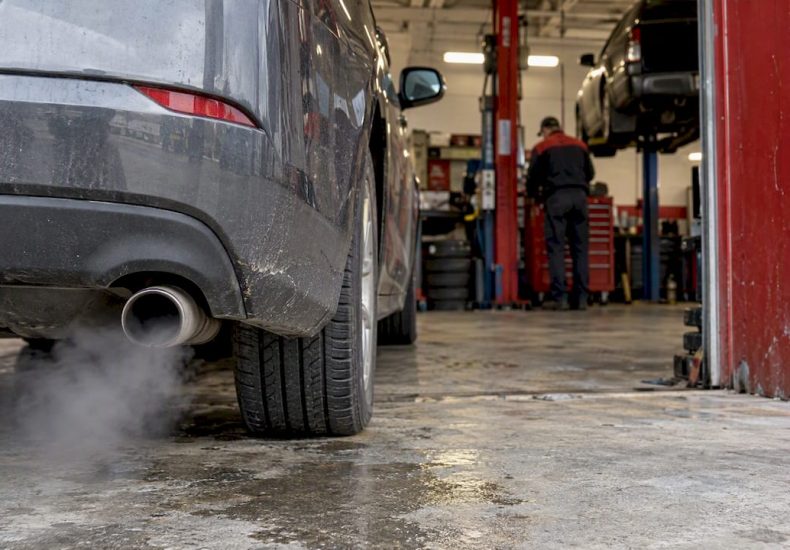
A sulfur or rotten egg smell from your exhaust is hydrogen sulfide, and it usually comes from one of three places: the fuel you just bought, a catalytic converter that isn’t processing exhaust properly, or a battery that is overcharging. If the smell shows up briefly after a cold start or hard acceleration and then goes away, fuel is a common reason. If it lingers, shows up with a check engine light or poor performance, or you smell it inside the cabin, get the car looked at soon.
Below, we break down each cause, how to tell them apart from the driver’s seat, which situations are urgent, and what a good shop checks first.
TL;DR
- The rotten egg smell is hydrogen sulfide. Sulfur is a natural part of crude oil and ends up in gasoline unless it is removed.
- A brief smell that fades is often fuel-related and not a sign of engine trouble. A constant smell, a lit check engine light or sluggish performance points toward the converter, fuel mixture or battery.
- A smell inside the cabin means exhaust may be getting in. Sulfur isn’t carbon monoxide, but carbon monoxide has no smell at all, so treat a cabin smell seriously.
- A hot, sweet-sulfur smell near the battery, or a swollen battery case, is a stop-and-have-it-checked situation.
- Replacing the converter first is often the wrong move. Diagnose the mixture, the sensors and the fuel before spending on parts.
Table of Contents
- Why exhaust smells like sulfur in the first place
- The main causes, from most to least harmless
- Quick guide: match your symptoms to the likely cause
- Does a rotten egg smell mean carbon monoxide?
- What you can check yourself in ten minutes
- What a good shop checks, and in what order
- Our perspective
- When we can help
- How to prevent the smell from coming back
- FAQ
- Sources
Why exhaust smells like sulfur in the first place
Gasoline contains small amounts of sulfur. During combustion that sulfur becomes sulfur compounds in the exhaust. The catalytic converter’s job is to turn harmful gases into less harmful ones, and under certain conditions it converts some of that sulfur into hydrogen sulfide, which is the gas that smells like rotten eggs. Your nose picks it up at very low concentrations, which is why even a clean-running car can produce a surprising stink.
The EPA notes that sulfur in gasoline impairs the effectiveness of emission control systems. Its Tier 3 program cut the gasoline sulfur limit to a 10 ppm average starting in 2017, down from roughly 30 ppm under the earlier standard. That helped a lot, but it didn’t eliminate the smell. Some vehicles still produce a sulfur odor with higher-sulfur fuel, particularly after cold starts, fast idle or full-throttle acceleration.
Toyota’s own support page makes the same point: a sulfur odor at the tailpipe doesn’t necessarily mean the engine has a problem, and it is most likely tied to the fuel. That is the honest starting point. The smell is a clue, not a verdict.
The main causes, from most to least harmless
1. Fuel with higher sulfur content
If the smell began right after a fill-up, especially at a different station than usual, fuel is the prime suspect. The pattern is distinctive: it is strongest when the engine is cold, during quick acceleration or on a long climb, and it fades as the car settles into steady driving. The car runs normally, the check engine light is off and fuel economy hasn’t changed.
What to do: finish the tank, then refill at a high-volume station you trust. If the smell disappears within a tank or two, you have your answer. Don’t replace parts to chase a smell that tracks with a fuel purchase. The EPA notes that replacing the converter in these cases is often ineffective.
2. A rich fuel mixture
When the engine sends more fuel than it can burn, the excess overloads the converter, which then runs hot and produces more hydrogen sulfide. Causes include leaking or sticking fuel injectors, a failing fuel pressure regulator, a faulty oxygen sensor, a bad coolant temperature sensor or a clogged air filter. AutoZone lists a rich mixture from faulty injectors or pressure regulators among the known sources of a rotten egg smell.
Symptoms that go with it:
- A check engine light, often with misfire or fuel trim codes
- Black smoke or a strong raw gasoline smell (our guide to what exhaust smoke color tells you covers this)
- Worse gas mileage than usual
- Rough idle, hesitation or sluggish acceleration
A rich condition is worth fixing quickly. It wastes fuel, and it can damage the converter, which turns a small repair into a large one.
3. A failing catalytic converter
A converter that has become clogged, overheated or worn out can’t process exhaust properly, and a sulfur smell is one of the classic signs. Other signs include reduced power, especially going uphill, a rattling sound from underneath (broken internal substrate), a hot smell from under the car after driving and a lit check engine light.
Here is the part many drivers get wrong: a converter efficiency code such as P0420 is not proof that the converter is bad. Sensors, exhaust leaks, misfires and fuel trim problems can all trigger it. We cover that in detail in converter failure symptoms and in our walkthrough of a five-minute O2 waveform test that can keep you from buying a converter you don’t need.
The converter is also often a victim rather than the culprit. If a rich mixture or misfire is what killed it, a new converter will fail the same way unless that root cause is fixed first.
4. An overcharging battery
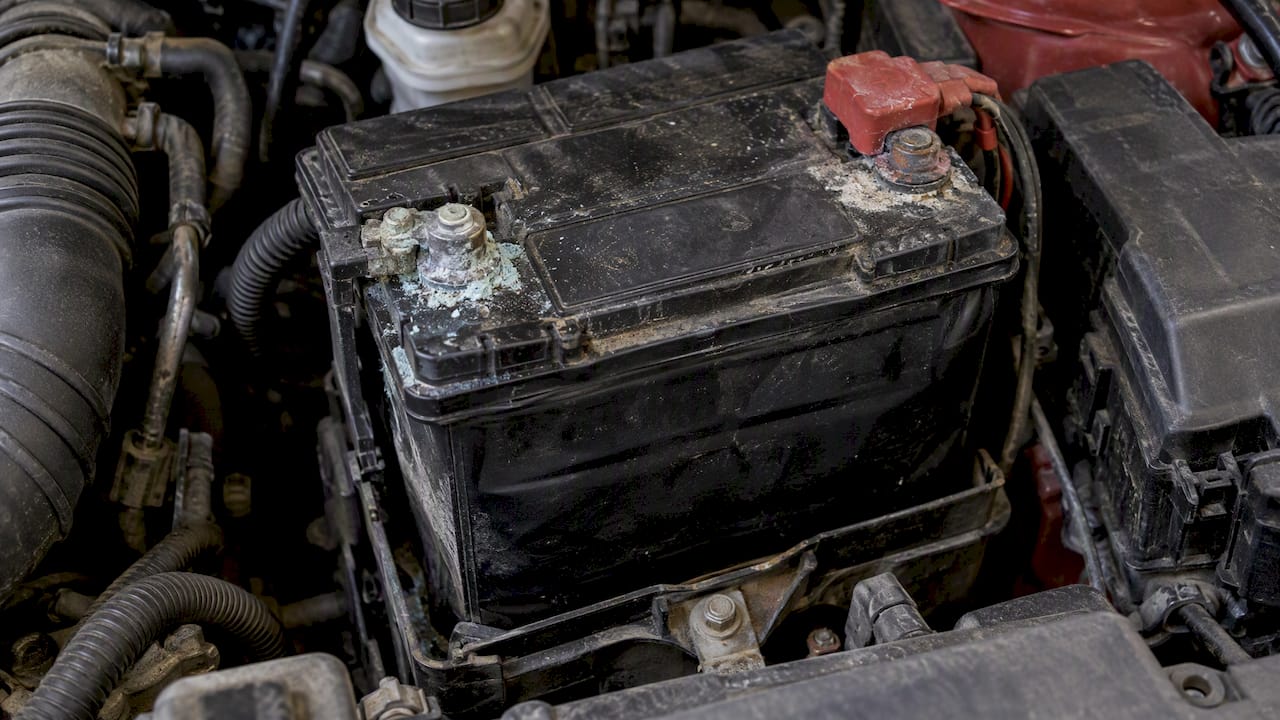
A battery that is being overcharged, often because of a failing voltage regulator or alternator, can boil its electrolyte and release hydrogen sulfide. The smell here tends to come from under the hood rather than the tailpipe, and it may be strongest right after you shut the engine off. AutoZone also notes that an overcharging battery carries a risk of hydrogen gas buildup and potential explosion.
Warning signs: a swollen or warm battery case, corrosion at the terminals, dimming or flickering lights, or a battery warning light. Don’t lean over the battery, and keep sparks and flames away from it. Have it tested the same day if you can. If you are on a hybrid, our hybrid battery service guide explains what service looks like for those systems.
5. Other sources: transmission and HVAC
Not every sulfur smell is exhaust. Some gear oils have a sulfur odor when they are old or overheated, so a smell near the rear differential or transmission after towing or heavy use is worth mentioning to your technician. A musty, sour or egg-like smell when you turn on the AC may be bacterial or mold growth in the HVAC system, not the exhaust. AutoZone lists mold and bacteria in the HVAC system among the possible causes. If the smell only shows up with the fan running, read about why car AC smells like mold and the vinegar smell from biofilm.
Quick guide: match your symptoms to the likely cause
| What you notice | Most likely cause | How urgent |
|---|---|---|
| Smell after a fill-up, mostly cold starts or hard acceleration, fades quickly | Fuel sulfur content | Low. Refuel elsewhere and watch |
| Smell plus check engine light and poor mileage | Rich mixture or misfire | Moderate. Book soon |
| Smell plus loss of power, rattling or heat under the car | Failing or clogged converter | Moderate to high. Don’t wait long |
| Smell strongest under the hood, warm or swollen battery | Overcharging battery or charging system | High. Same-day check |
| Smell inside the cabin | Exhaust leak or intrusion | High. Open windows and have it inspected |
| Smell only with AC or fan on | HVAC mold or bacteria | Low to moderate |
Does a rotten egg smell mean carbon monoxide?
Not by itself, but don’t let that reassure you too much. Sulfur has a strong odor. Carbon monoxide is, in the EPA’s description, colorless and odorless, and it can be poisonous. So the egg smell is not a CO alarm, and the absence of a smell tells you nothing about CO.
What the smell can mean is that exhaust gases are reaching places they shouldn’t. An EPA study of police cars and taxicabs found that elevated carbon monoxide in the passenger area traced back to leak sources and intrusion pathways, commonly through the trunk and rear seat area of the vehicle. Rear exhaust leaks and worn body seals are the usual routes.
If you smell exhaust of any kind inside the car:
- Open the windows and turn the fan to fresh air, not recirculate.
- Pull over safely if you feel headache, dizziness, nausea or drowsiness, and get fresh air.
- If you feel unwell, seek medical care. If symptoms are severe, call 911.
- Don’t keep driving with a known exhaust leak. Have it inspected before the next trip.
Headaches while driving are a classic early sign. Our article on exhaust leak symptoms and carbon monoxide exposure explains what to watch for.
What you can check yourself in ten minutes
You don’t need tools to narrow things down. Work through these in order:
- Think back to your last fill-up. Did the smell start within a day of buying gas at a new station?
- Note when it happens. Cold start only, hard acceleration only, or constantly? Brief and situational leans toward fuel. Constant leans toward a mechanical fault.
- Look at the dash. A check engine light changes the picture. A battery or charging warning points toward the electrical side.
- Pop the hood after a drive, with the engine off. Do you smell it stronger near the battery? Is the case bulging or leaking? Don’t touch it with bare hands if it looks damaged.
- Sniff for gasoline too. A raw fuel smell alongside sulfur points to a rich mixture or a fuel leak. See what a gas smell means and when to stop driving.
- Run the fan with AC off, then on. If the smell only appears with the AC, the exhaust is probably not the problem.
- Listen underneath. Rattling from beneath the car, especially after a hard stop or start, can mean a broken converter interior.
If you want a broader overview of odors beyond sulfur, our engine smells guide goes through burning oil, hot coolant, burning rubber and more.
What a good shop checks, and in what order
The expensive mistake with this symptom is guessing. A converter can cost far more than any of the other fixes, and it won’t solve a smell that is caused by the fuel or by a mixture problem. A methodical diagnosis looks like this:
- Scan for codes and freeze-frame data. Even pending or stored codes tell us whether the computer has already seen a mixture, misfire or converter problem.
- Check fuel trims. Long-term and short-term trims show whether the engine is running rich, and on which bank.
- Test oxygen sensor behavior. The sensors before and after the converter show whether it is storing and releasing oxygen the way it should.
- Look for exhaust leaks. A leak ahead of the downstream sensor can fool the system into setting a converter code.
- Inspect fuel injectors, pressure and ignition components. Misfires dump unburned fuel into the converter.
- Test the battery and charging system. Measure charging voltage to rule out overcharging.
- Only then, decide on the converter. If the converter is truly failed, we fix the root cause first so the new one lasts.
That sequence is also what keeps the bill honest. Many cars with a sulfur smell need nothing more than a fuel change, and a good shop will tell you so.
Our perspective
We have been fixing cars in Lynnwood since 1985, and the sulfur smell call is one we handle often. Our view is simple: don’t let a smell talk you into a parts purchase. We have seen drivers arrive convinced they need a converter when the smell traced back to a rich condition, a tired sensor or a tank of gas from a different station. We have also seen the opposite, where a driver ignored a smell with a check engine light for months until the converter was cooked.

So we start with the data. Our ASE-certified technicians run professional-grade OBD-II diagnostics, look at fuel trims and sensor behavior, and show you what we find in a digital inspection before we recommend any repair. You get upfront pricing, so you know what a job costs before we start it. And because many of our customers drive Toyotas, Hondas and Subarus, as well as domestic, European and hybrid vehicles, we are used to the quirks that make each of them smell a little different.
One rule we hold to: if the fuel is the likely cause, we say so and send you home. If the repair is real, we stand behind it with a 24-month, 24,000-mile warranty on all work.
— Shingi
When we can help
If your car has a persistent sulfur smell, a check engine light or poor performance, book a diagnostic visit. Our check engine light diagnostics and full list of services cover scanning, fuel mixture and converter testing, and repairs for all makes. Same-day appointments are often available. If the root cause turns out to be engine-related, see our engine repair in Lynnwood, or if the car is simply due for maintenance, a tune-up in Lynnwood can address worn ignition parts that cause misfires.
A few published starting prices that may help you plan: an oil change starts at $100, AC repair starts at $150, and brake repair starts at $280 per axle. We also offer discounts for military members, seniors and first responders.
How to prevent the smell from coming back
- Keep up with maintenance. Worn spark plugs, dirty air filters and old sensors lead to rich running and misfires. Interval services such as our 30k, 60k and 90k service are built to catch these.
- Fix the check engine light early. A misfire left alone can overheat and damage the converter.
- Buy fuel from busy, reputable stations. If a particular station is followed by the smell, switch.
- Have the battery and charging system tested when the battery is a few years old, or when lights flicker.
- Don’t ignore cabin smells. Exhaust intrusion is a safety issue, not a nuisance.
FAQ
Is it safe to drive with a sulfur smell from the exhaust?
If the smell is brief, shows up after a fill-up and the car runs normally, it is usually not dangerous. If it is constant, comes with a check engine light or power loss, or you smell it inside the car, get it inspected soon. Smell inside the cabin or from the battery area is urgent.
Do car batteries smell like rotten eggs when they go bad?
They can. An overcharging battery can release hydrogen sulfide, and the smell is usually strongest under the hood. A hot, swollen or leaking case is a reason to have the battery and charging system tested right away and to avoid sparks near it.
Does a bad catalytic converter always cause a rotten egg smell?
No. A failing converter often causes a sulfur smell, but many failed converters show up as lost power, a rattle or a check engine light instead. And many sulfur smells have nothing to do with the converter, which is why testing the fuel mixture and sensors comes before replacement.
Why does my car only smell like rotten eggs sometimes?
Intermittent smells usually follow conditions: cold starts, fast idle, hard acceleration or a recent tank of higher-sulfur fuel. The EPA notes that some vehicles can still produce the odor in those situations even with today’s lower-sulfur gasoline. If it keeps happening after a couple of tanks, have it checked.
Will a new catalytic converter fix the smell?
Only if the converter was the actual cause. If the smell comes from fuel or a rich mixture, a new converter may smell the same, and it can be damaged by the underlying problem again. Diagnose first, then decide.
Sources
- Gasoline Sulfur, US EPA
- Why Does My Car Smell Like Rotten Eggs? AutoZone
- Air Quality Criteria for Carbon Monoxide, EPA, December 1991
- Carbon monoxide intrusion in sustained-use vehicles, EPA
Recommended
- Engine Smells: What Every Driver Needs to Know
- Exhaust Leak Symptoms: Headaches Can Signal Carbon Monoxide Exposure
- Why Exhaust Rattles: Causes, Fixes, and Costs
- What Your Car’s Exhaust Smoke Color Is Telling You
Leave a Reply