
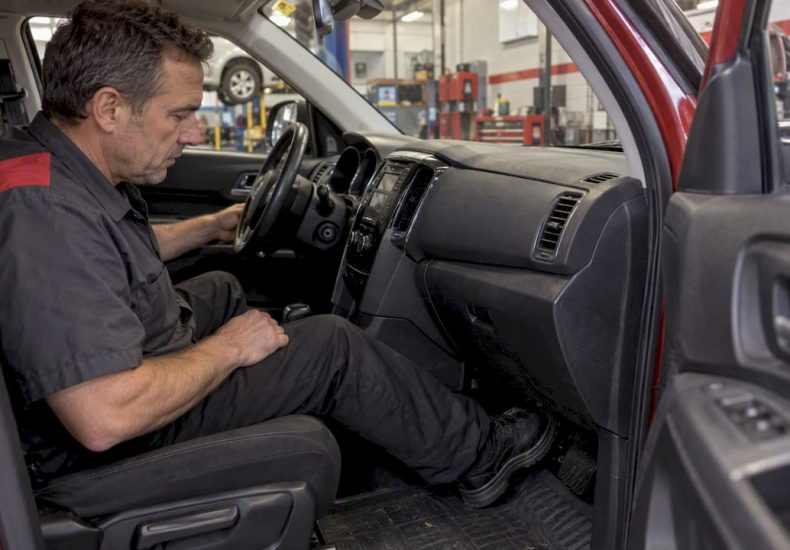
Soft Brake Pedal? Know When to Tow and What Mechanics Test
A soft or spongy brake pedal usually signals lost hydraulic pressure, from air in the lines, a fluid leak, or a failing master cylinder. If the pedal sinks toward the floor, stop driving and get the car inspected right away. Fixes range from a simple brake bleed to replacing hydraulic parts, and none of them should wait.
TL;DR:
- Tow the car if the pedal reaches the floor, a brake warning light appears, the vehicle pulls while braking, or you find fresh fluid leaks.
- Pumping may briefly firm a pedal when air is trapped, while a pedal that slowly sinks under steady pressure points toward master cylinder failure.
- Check the reservoir and wheels for low or dirty fluid and fresh wet spots, then record warning lights and pedal behavior for the mechanic.
- AAA recommends replacing brake fluid every 2 to 3 years, but follow the vehicle manufacturer’s schedule and have suspected leaks or part failures diagnosed.
- The shop’s brake repair starts at $280 per axle, but the final price depends on inspection findings, labor, parts, and any ABS work.
Table of Contents
- Is it safe to drive with a soft brake pedal right now?
- What causes a spongy brake pedal?
- How can you check a soft brake pedal safely at home?
- When should you stop driving and call for a tow?
- What does a professional brake inspection and repair include?
- How can you prevent a soft brake pedal?
- Our view on soft pedals and proof points
- Brake repair at our Lynnwood shop
- FAQ
- Sources
Is it safe to drive with a soft brake pedal right now?
Not if any of these red flags show up. Haynes lists a low pedal, a vehicle pulling to one side while braking, or a brake warning light as signs that need immediate professional attention.
- The pedal sinks to the floor or keeps sinking under steady pressure.
- The brake warning light is on.
- The car pulls left or right when you brake.
- You see fresh fluid under the car or at a wheel.
If the pedal feels soft, do not drive the vehicle. Have it professionally inspected, and arrange a tow if needed. Your stopping distance is not something to gamble with, and a pedal that feels fine in the driveway can fail in traffic.
Pumping the pedal may firm it up for a moment when air is trapped in the lines. Treat that as information gathering, not a fix.
Pro Tip: If the pedal firms up after pumping, tell your mechanic. It points toward air in the system rather than a failing master cylinder.
What causes a spongy brake pedal?
Mechanics work through a short list of suspects, and each one produces a slightly different feel.
Air in the lines. Wagner calls air in the brake lines the most common cause of a soft pedal. Air in the brake lines can make the pedal feel springy. A mechanic can check for air and other causes. Kelley Blue Book makes a point that surprises many drivers: ASE-certified technicians say people sometimes mistake air in the lines for pad wear, when a spongy pedal is really a hydraulic issue.
External leaks. Leaking lines, calipers or wheel cylinders let hydraulic pressure escape, and the pedal can sit low or drop to the floor.
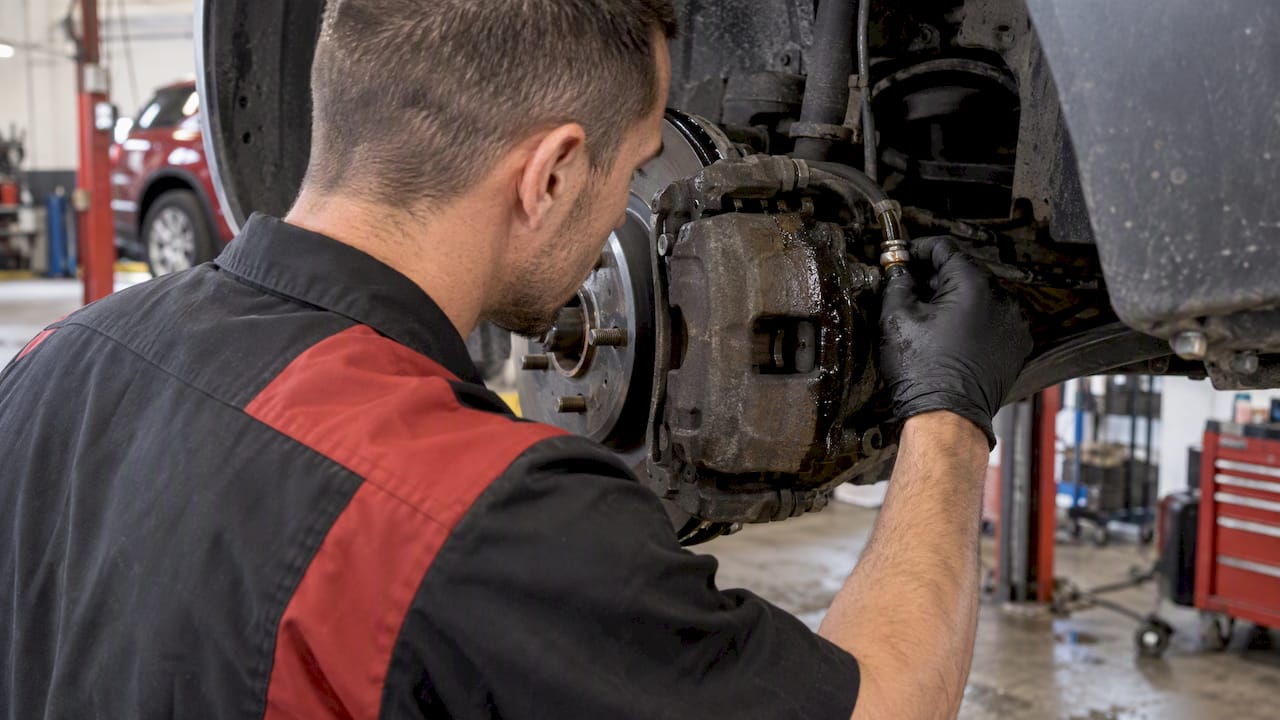
Old or contaminated fluid. Contaminated brake fluid can contribute to a soft or spongy pedal.
A failing master cylinder. When its internal seals wear out, the pedal slowly sinks while you hold steady pressure. Mechanics call this pedal creep, and it feels different from the springy give of trapped air, which may improve with pumping.
Hoses, calipers and ABS parts. Hose, caliper, or ABS problems may contribute to a soft pedal. An ABS modulator fault can be difficult to diagnose without professional tools.
Mechanical adjustment. Rear drum shoes or parking brake linkage that are out of adjustment need extra pedal travel to close the gap, so a rear brake adjustment issue can mimic a hydraulic problem.
How can you check a soft brake pedal safely at home?
You are collecting clues for your mechanic, not attempting a repair. Work on level ground with the engine off unless a step says otherwise.
- Open the hood and check the brake fluid reservoir. Low fluid or dark, dirty fluid is a diagnostic clue.
- Look around each wheel and under the car for fresh wet spots. Do not touch hot parts.
- Pump the pedal a few times. If it improves, air is likely. If it slowly sinks under steady pressure, suspect the master cylinder.
- On a vacuum-assisted system, pump the pedal several times, hold it down, then start the engine. The pedal should fall slightly if the booster works.
- Note any dashboard lights, especially the ABS light, and photograph or film any leaks or the pedal travel.
Fluid timing matters: the AAA Auto Club Group notes that brake fluid should be replaced every 2 to 3 years to prevent moisture buildup and degraded pedal feel.
If the ABS light is on, our guide to what the ABS light actually means explains what to tell the shop.
When should you stop driving and call for a tow?
Set a firm line before you need it:
- Tow immediately if the pedal sinks to the floor, the brake warning light is on, or the car pulls hard when you brake.
- Short, careful repositioning is acceptable only when the pedal is slightly soft and you see no leaks and no warning lights.
- Never take a soft pedal onto a highway or into heavy traffic.
Inspection and a basic bleed may be completed quickly, but timing depends on the diagnosis and the shop. Replacing a master cylinder, hoses or calipers may take longer, depending on parts availability. Tell the shop what you observed so the inspection starts in the right place.
What does a professional brake inspection and repair include?
A thorough diagnosis goes well beyond topping off fluid. Shops typically do a visual leak check, remove wheels to inspect calipers and wheel cylinders, pressure test the system, bench test the master cylinder, and scan the ABS system for faults. Our brake system components checklist shows the parts a technician looks at.
Common repairs include:
- Brake fluid flush and pressure bleeding. Our overview of what brake bleeding involves explains why a professional bleed matters.
- Master cylinder replacement.
- Brake hose or line repair.
- Caliper or wheel cylinder rebuild or replacement.
- ABS module diagnosis or replacement.
Cost depends on which part failed, labor hours, how complex the ABS or hydraulic module is, and what warranty the shop gives. Our brake repair starts from $280 per axle, and we confirm the exact scope after inspecting your car.
Pro Tip: Ask any shop about ASE certification, ABS scan capability, and the parts and labor warranty before you approve work.
How can you prevent a soft brake pedal?
Most soft pedals trace back to neglected fluid or worn hydraulic parts, so routine care pays off.
- Replace brake fluid on the schedule your manufacturer or shop recommends. A partner publication, FrenzyCars, also recommends a flush every 2 to 3 years, and our own brake fluid interval guide covers the details.
- Have lines, hoses, calipers and pads inspected at regular service intervals.
- Use the parking brake now and then where rear shoes need adjusting.
- After any brake job, insist on proper pressure bleeding and a technician road test.
Our view on soft pedals and proof points
Most people treat a soft pedal as something to monitor. We think that is backwards: it is one of the few brake symptoms that deserves action the same day. Our technicians use diagnostic tools and stand behind their repairs. Ask us about technician qualifications and warranty terms, especially when the cause may involve the hydraulic or ABS system.
— Shingi
Brake repair at our Lynnwood shop
Do not risk driving on a soft pedal. We handle diagnostics, bleeding and part replacement, and appointments may be available. Ask us about warranty terms for your repair.
- Inspection and diagnosis of the full hydraulic system
- Fluid flush, pressure bleeding and component replacement
- Upfront pricing before work begins
Call or book a brake inspection today.
FAQ
How do you fix a soft brake pedal?
The fix depends on the cause. Air or old fluid is corrected by pressure bleeding or a flush, while leaks and failing parts need repair or replacement. Kelley Blue Book notes that pumping only helps temporarily and does not fix leaks or contamination.
What does it mean if the brake pedal is soft?
It usually means the hydraulic system is not holding pressure, most often because of air, a leak, or contaminated fluid. A worn master cylinder or an out-of-adjustment rear brake can also be the cause.
Is it safe to drive with a soft brake pedal?
No, not if the pedal sinks, a warning light is on, or the car pulls. Have it inspected right away and tow the car if in doubt.
How much does it cost to fix a soft brake pedal?
It varies with the cause, from a bleed and flush to replacing a master cylinder, hoses, calipers or an ABS module. Our brake repair starts from $280 per axle, and we quote the full job after diagnosis.
Sources
- Brake Pedal Goes to Floor: How to Handle the Issue – Haynes Manuals North America
- Why Do My Brakes Feel Spongy? – Kelley Blue Book
- Causes of Spongy Brakes | Wagner Brake
- Philtop-auto
Recommended
- Brake System Components Checklist: Your Safety Guide
- 2–3 Years? OEM Schedules and Tests Set Brake Fluid Change for Drivers
- What Is Brake Bleeding? A Car Owner’s Guide
- How to Inspect Brake Pads at Home: A Safe Guide
Leave a Reply